
Landscaping
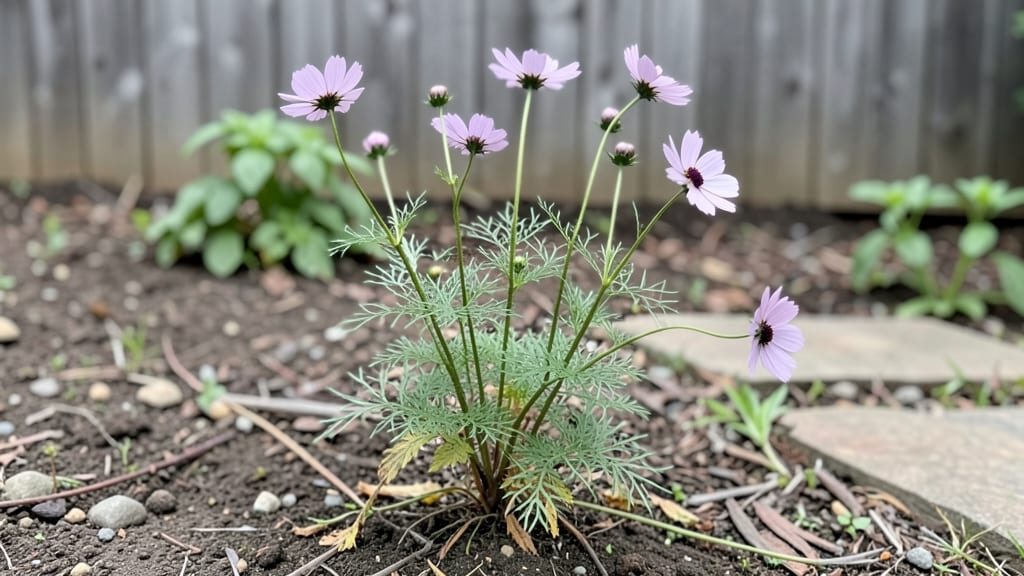
My cosmos garden design starts with pollinator-focused layers that keep blooms coming from summer through frost. ✨ The secret lies in mixing tall varieties like 'Bright Lights' with shorter types—it creates a living tapestry that hummingbirds and bees can't resist.
I learned this after my first attempt left gaps where nothing grew between early blooms and late-season flowers.
You'll need just three types of cosmos for a foolproof design: dwarf varieties for borders, mid-height ones as filler, and towering types like 'Seashells' as dramatic accents. Plant them in drifts, not rows, to mimic wildflower meadows—this creates natural movement and hides any sparse spots.
The best part? Cosmos self-seed like crazy, so once established, they multiply without effort.
By late summer, your garden will burst with season-long color—pinks, whites, and deep reds that shift as old blooms fade and new ones open. The air hums with pollinators, and you'll have endless cut flowers for bouquets.
Even my black thumb keeps these thriving with minimal deadheading and no fuss.
Works in cottage gardens, wildflower borders, or even large containers—just give them full sun and average soil. Here's how to layer them for maximum impact and minimal work.
📚 In This Guide
- What you need
- Instructions
- Tips and common mistakes
- Wrapping up and next steps
What you need
- ● Cosmos seeds: Choose Cosmos bipinnatus or Cosmos sulphureus (1–2 oz per 100 sq ft). Opt for pollinator-friendly varieties like ‘Bright Lights’ or ‘Sensation Mix.’
- ● Native wildflower seeds: Mix in 5–10% native species (e.g., black-eyed Susans, coneflowers) for biodiversity.
- ● Well-draining potting mix: 5–10 bags (2–3 cu ft each) for containers or in-ground planting.
- ● Compost: 2–3 bags (40 lb each) to enrich soil fertility.
- ● Mulch: 1–2 bags (2 cu ft each) of shredded bark or straw to retain moisture.
- ● Drip irrigation or soaker hoses: 50–100 ft (¼” tubing) for efficient watering.
- ● Garden gloves (1 pair) – Protect your hands from thorns and soil.
- ● Hand trowel – For precise planting in containers or small beds.
- ● Pruners – Bypass pruners (for deadheading and shaping).
- ● Garden rake – To level soil and remove debris.
- ● Measuring tape – For spacing plants 12–18” apart.
- ● Watering can or hose nozzle – For gentle watering (avoid blasting seeds!).
- ● Pollinator hotel – A small structure for solitary bees (e.g., bamboo tubes).
- ● Birdbath or shallow dish – Fill with water for butterflies and bees.
- ● Colorful stakes or obelisks – To support tall cosmos varieties (e.g., ‘Cosmic Orange’).
- ○ Slow-release fertilizer – 1–2 lbs for nutrient boost (optional for amended soil).
- ● Seed-starting trays – If you prefer to start seeds indoors 4–6 weeks before last frost.
How to design a pollinator-focused cosmos garden
Here's the approach I use to create a low-maintenance, bee-magnet cosmos garden that blooms from summer to frost.
🌱 Step 1: Plan Your Planting Layers for Height and Bloom Time
Cosmos thrive in layered designs where taller varieties anchor the back, mid-height plants create texture, and low growers spill forward. I always start by sketching three distinct layers: 6-8 feet tall cosmos like 'Bright Lights' or 'Sensation Mix' for the back row, 3-4 feet varieties like 'Double Click' in the middle, and 1-2 foot types like 'Purity' or 'Sensation Pink' up front.
For continuous color, mix early bloomers like 'Bright Lights' (which flowers in 6-8 weeks) with mid-season types ('Sensation Mix') and late-season performers ('Seashells'). This ensures your garden never looks bare. I space each layer 12-18 inches apart—cosmos have delicate stems that need room to sway without crowding.
☀️ Step 2: Choose the Sunniest Spot in Your Yard
Cosmos demand full sun (6+ hours daily) for their best performance. I always scout the location first: check for afternoon shade from trees or buildings, and avoid spots where morning dew lingers all day (cosmos hate wet feet). The ideal site gets at least 6 hours of direct sun, with 8+ hours preferred for the tallest varieties.
If your space only gets partial sun, focus on the shorter cosmos varieties—they tolerate 3-4 hours of sun better than their towering cousins. I've found that even 4 hours of morning sun works for 'Purity' cosmos, but the flowers will be smaller and less prolific.
💧 Step 3: Prepare the Soil with Light Amendments
Cosmos are famously low-maintenance, but they do best in soil that drains well. I never amend heavy clay or sandy soil without help: for clay, I mix in 2-3 inches of compost to improve drainage, while for sandy soil, I add 1 inch of peat moss to help retain moisture. The goal is loose, crumbly soil that feels like a damp sponge when squeezed.
Skip heavy fertilizers—cosmos thrive in lean soil. A light application of 5-10-10 fertilizer at planting (just 1 tablespoon per plant) gives them a gentle boost without encouraging weak stems. I always water the soil thoroughly before planting to help roots establish quickly in the prepared bed.
🌿 Step 4: Plant with Pollinator Pathways in Mind
Design your cosmos beds with winding paths or staggered rows to guide pollinators through the garden. I plant cosmos in 3-5 plant clusters rather than single rows, creating natural landing zones for bees. Space clusters 18-24 inches apart to allow easy movement between blooms.
For maximum pollinator impact, interplant cosmos with other nectar-rich flowers like zinnias, coneflowers, or black-eyed Susans. I like to place cosmos at the back or edges of beds where pollinators can easily find them. The key is variety: a single cosmos bed attracts bees, but a mixed border keeps them visiting all season.
✂️ Step 5: Maintain with Minimal Effort
Deadhead spent blooms regularly to encourage continuous flowering until frost. I shear off faded flowers with clean scissors, cutting just above a set of leaves. This simple step keeps cosmos blooming for 3-4 months longer than neglected plants. Avoid over-pruning—never cut more than 1/3 of the plant at once.
Water deeply 1-2 times per week once established, focusing on the base of plants to avoid wetting leaves (which can cause mildew). Cosmos are drought-tolerant, but they'll reward you with bigger blooms if you keep soil consistently moist during their first 4-6 weeks of growth. After that, let them go thirsty—they'll bounce back quickly.
Tips & tricks for perfect pollinator-focused cosmos gardens
A few strategic moves can transform your cosmos garden from pretty to pollinator paradise. These are the secrets I've learned after watching bees and butterflies flock to my beds.
Layering Like a Pro: In Step 1, when sketching your layers, I like to add a fourth "hidden" layer—plant a few cosmos varieties along fences or trellises to create vertical interest. This not only adds height but also provides landing platforms for pollinators that might miss ground-level blooms. The 12-18 inch spacing between layers is crucial—it gives pollinators room to navigate without feeling crowded, which actually increases their efficiency in collecting nectar.
Sunlight Strategy: For Step 2, remember that morning sun is often more intense than afternoon sun, especially in northern climates. If you're working with partial sun spots, position your shorter cosmos varieties to catch those morning rays first. I've found that 'Purity' cosmos in morning sun produce noticeably larger blooms than when planted in afternoon sun spots, even when both get the same total hours of light.
Soil Secrets: When amending soil in Step 3, don't overdo the peat moss—just 1 inch is plenty. Too much can make the soil too acidic, which actually stresses cosmos. Instead, I like to add a handful of coarse sand to clay soil to improve drainage without altering the pH. The damp sponge test is key: if water beads up on the surface after squeezing, you need more compost to break up clay particles.
Pollinator Pathways: In Step 4, think beyond just the cosmos clusters. Create "bee highways" by leaving small gaps between your 3-5 plant clusters—about 6-12 inches wide. This gives pollinators clear flight paths through your garden. I also plant a few cosmos varieties with particularly showy blooms (like 'Bright Lights') at the ends of these pathways to create visual beacons for bees entering your garden.
Pro Tips for Cosmos Garden Design
- A few strategic moves can transform your cosmos garden from pretty to pollinator paradise.
- Layering Like a Pro: In Step 1, when sketching your layers, I like to add a fourth "hidden" layer—plant a few cosmos varieties along fences or trellises to create vertical interest.
- Sunlight Strategy: For Step 2, remember that morning sun is often more intense than afternoon sun, especially in northern climates.
Frequently asked questions
How do I time cosmos planting for continuous blooms?
For season-long color, stagger plantings every 2–3 weeks from late spring to early summer. Early varieties (like ‘Bright Lights’) bloom first, while late-season types (e.g., ‘Sensation’) extend the show into fall. Pro tip: Use succession planting—replace spent plants with new ones to keep the garden vibrant!
Will cosmos attract bees, butterflies, AND hummingbirds?
Cosmos are a pollinator magnet—their open, flat blooms are perfect for bees and butterflies, while tubular varieties (like ‘Cosmos bipinnatus’) lure hummingbirds. Bonus: Pair them with native milkweed or salvia to supercharge your garden’s appeal.
Can I grow cosmos in containers or small spaces?
Yes! Cosmos thrive in containers as long as the pot has drainage holes and is at least 12 inches deep. Dwarf varieties (e.g., ‘Proxima White’) work well in window boxes or balcony gardens. Space-saving hack: Train them near trellises or let them spill over edges for a cascading effect.
Do cosmos need full sun? What if my garden is shady?
Cosmos love full sun (6+ hours daily) but tolerate partial shade (4–6 hours). In shadier spots, opt for shorter varieties (like ‘Cosmos ‘Sensation Mix’), which handle lower light better. Troubleshooting: If blooms are sparse, thin plants to improve airflow and sunlight penetration.
Why aren’t my cosmos blooming? How do I fix it?
Sparse blooms often mean over-fertilizing (cosmos hate rich soil!) or lack of sunlight. Try this: Deadhead spent flowers, reduce fertilizer, and ensure they get at least 6 hours of sun. Quick fix: Prune leggy stems to encourage bushier growth and more blooms.
Wrapping up and next steps
Designing a cosmos garden isn’t just about beauty—it’s about creating a thriving ecosystem that celebrates nature’s pollinators while keeping your outdoor space vibrant all season long. 🌸 By layering cosmos with complementary plants, planning for seasonal blooms, and prioritizing pollinator-friendly choices, you’ve got everything you need to craft a garden that’s both stunning and sustainable.
Ready to bring your vision to life? Start small—whether it’s a single bed or a corner of your yard—and let your cosmos garden grow into a pollinator paradise. Grab your tools, sketch a plan, and watch your garden transform!