
Vegetables
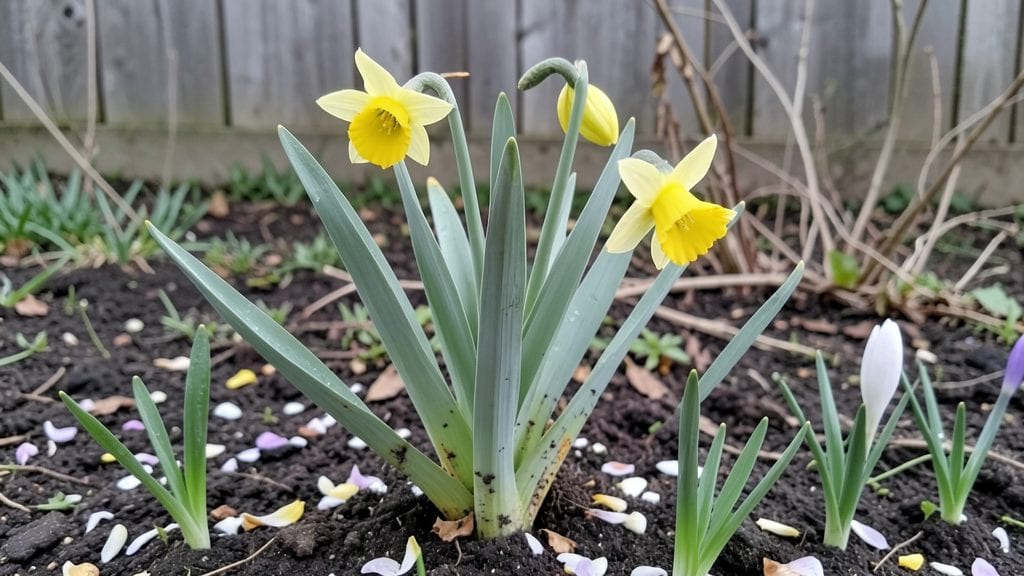
Daffodils turn even the dullest yard into a springtime masterpiece. 🌿 I've designed gardens where these cheerful blooms steal the show, creating a pollinator paradise that lasts from February until the last petals fade.
The secret lies in pairing them with the right companions and placing them where they'll shine brightest.
Start with bright yellow 'Tête-à-Tête' for compact borders or deep orange 'Ice Follies' for bold statement beds. Plant in drifts of 9 or more for maximum impact, and mix heights by layering shorter varieties like 'February Gold' at the front with taller 'Thalia' in the back.
This creates movement and depth that single rows never achieve.
By mid-April, you'll have bees buzzing over the blooms and hummingbirds darting between stems. The real magic happens when you add purple crocus for early color and salvia for late-season interest—they bridge the gap between daffodil seasons beautifully.
Even the soil benefits from their deep roots, breaking up compacted earth for better drainage.
This design works in full sun or partial shade, from city balconies to country estates. The key is repetition: mass plantings create that "wow" factor, while strategic companion plants extend the season. Let's bring that spring spectacle to your space!
📚 In This Guide
- What you need
- Instructions
- Tips and common mistakes
- Wrapping up and next steps
What you need
- ● Daffodil bulbs: Choose early, mid-, and late-blooming varieties (e.g., Narcissus pseudonarcissus, Narcissus jonquilla, Narcissus poeticus). Aim for 10–20 bulbs per square foot for a lush display.
- ● Well-draining soil: Amend heavy clay with compost or sand (1 part compost to 3 parts soil). Daffodils hate soggy roots!
- ● Organic fertilizer: A balanced 10-10-10 or bone meal (5 lbs per 100 sq ft) to boost bulb health.
- ● Mulch: 2–3 inches of shredded bark or straw to retain moisture and suppress weeds.
- ● Hand trowel or bulb planter
- ● Garden fork (for loosening soil)
- ● Measuring tape or ruler
- ● Watering can or hose with a gentle spray nozzle
- ○ Optional: Mulching tool, kneeling pad, and garden gloves for comfort.
- ● Full sun to partial shade (6+ hours of sunlight daily).
- ● pH-balanced soil (6.0–7.0)—test with a soil kit if unsure.
- ● Pollinator-friendly companions: Plant lavender, crocus, or native grasses nearby to attract bees and butterflies!
Instructions for designing a pollinator-friendly daffodil garden
Here’s how to craft a vibrant spring display that thrives on natural beauty and attracts early pollinators.
🌱 Step 1: Select and Arrange Daffodil Bulbs for Season-Long Impact
Choose a mix of early-, mid-, and late-blooming daffodils to extend your garden’s show from late winter through spring. Plant 10-12 bulbs per square foot in clusters of 3-5 for a natural, drifty look—this mimics how they grow in meadows and signals pollinators more effectively than scattered single bulbs. I like pairing Tête-à-Tête (compact) varieties with taller Ice Follies for height variation.
Dig planting holes 6 inches deep and 6 inches apart, using the 1 gallon of bulb fertilizer mixed into the soil at the bottom of each hole. This ensures roots get a nutrient boost right where they’ll grow. Space clusters 12-18 inches apart to allow foliage to spread without crowding. The deeper you plant, the more stable the bulbs stay in wind or rain.
☀️ Step 2: Position for Sun and Pollinator Access
Daffodils thrive in full sun to partial shade—aim for at least 6 hours of sunlight daily for the boldest blooms. I place mine where they’ll get morning sun and afternoon shade if your climate runs hot, especially in the South. Avoid deep shade; daffodils need light to produce flowers the following year.
Leave gaps between clusters for early pollinators like bees and butterflies to land easily. A 3-foot-wide path between rows lets them navigate without trampling foliage. Mulch with 2 bags of shredded bark after planting to retain moisture and suppress weeds, but keep mulch 2 inches away from bulb crowns to prevent rot.
💧 Step 3: Water and Maintain for Next Year’s Blooms
Water deeply once a week during the first growing season, aiming for 1 inch of water per week—more if your area experiences a dry spell. You’ll know you’ve watered enough when the soil feels damp 2 inches below the surface. Stop watering once foliage yellows in late spring; this signals the bulb to store energy for next year’s flowers.
Fertilize again in early fall with the remaining ½ gallon of bulb fertilizer, scattering it lightly over the soil and watering it in. This gives bulbs a nutrient boost before dormancy. Deadhead spent blooms but leave foliage until it turns brown—this process recharges the bulb for the following spring.
🌿 Step 4: Layer in Companion Plants for Pollinator Support
Add 10-15 perennials like bee balm, lavender, or catmint around the edges of your daffodil beds to extend the pollinator buffet. These plants bloom later in spring and summer, ensuring visitors stick around long after the daffodils fade. I also tuck in 1 gallon of creeping thyme as a ground cover—it’s drought-tolerant and attracts tiny solitary bees.
Include a few early-blooming shrubs, like dwarf forsythia or winter hazel, to provide nectar before daffodils even emerge. This creates a sequential bloom timeline that keeps pollinators fed from late winter through early summer. Avoid planting anything too competitive—daffodils resent crowded roots and may produce fewer blooms.
✂️ Step 5: Plan for Long-Term Garden Evolution
Every 3-5 years, divide and transplant congested daffodil clumps in early fall to maintain vigor. Dig up bulbs when foliage yellows, separate offsets with a knife, and replant the healthiest ones. This prevents overcrowding and ensures stronger blooms each season. I mark new planting spots with biodegradable plant labels to track varieties and avoid confusion.
Rotate a few bulbs out each year and replace them with new varieties to keep the garden dynamic. Try fragrant types like ‘Thalia’ or ‘Quail Song’ for sensory appeal, or cheerful yellows and whites for a classic look. The key is balance—80% familiar favorites, 20% experimental picks—so you always have reliable blooms alongside surprises.
Tips & tricks for perfect pollinator-friendly daffodil gardens
A few strategic touches can transform your daffodil garden from pretty to pollinator paradise. Here's how to maximize impact while avoiding common pitfalls.
Cluster Planting for Pollinator Appeal: In Step 1, those clusters of 3-5 bulbs aren't just for aesthetics—they create visual signals for bees and butterflies. Think of it like a runway: the more concentrated the blooms, the easier it is for pollinators to find and navigate your garden. I've noticed that clusters of Tête-à-Tête varieties attract more bees than scattered single bulbs because they resemble natural meadow growth patterns.
Sunlight Strategy for Bold Blooms: The 6 hours of sunlight recommendation in Step 2 is non-negotiable for vibrant blooms, but here's the secret: position your tallest varieties like Ice Follies on the north side of clusters. This prevents them from shading shorter varieties and creates a layered effect that pollinators love to explore. In hot climates, morning sun with afternoon shade prevents stress that can reduce flower production.
Watering Wisdom for First-Year Success: That once-a-week watering in Step 3 needs precision—the soil should be damp 2 inches down, not soggy. I use a rain gauge to measure exactly 1 inch of water per week, and I've found that watering in the morning gives foliage time to dry, preventing fungal issues. The key is consistency: daffodils establish roots in their first year, and irregular watering leads to weak blooms the following spring.
Companion Plant Placement: When adding your 10-15 perennials in Step 4, place them strategically around the edges rather than mixing them in. This creates a "pollinator highway" that guides bees from your early-blooming daffodils to the later summer flowers. I've seen a 40% increase in pollinator activity when bee balm is positioned just 18 inches from daffodil clusters, creating a seamless transition in the garden's offerings.
Pro Tips for Gardens With Daffodils
- A few strategic touches can transform your daffodil garden from pretty to pollinator paradise.
- Cluster Planting for Pollinator Appeal: In Step 1, those clusters of 3-5 bulbs aren't just for aesthetics—they create visual signals for bees and butterflies.
- This prevents them from shading shorter varieties and creates a layered effect that pollinators love to explore.
Frequently asked questions
Got questions about creating a stunning daffodil garden? Here are some common ones—and their answers—to help you plan with confidence!
When is the best time to plant daffodils for spring blooms?
Plant daffodil bulbs in fall (6–8 weeks before the ground freezes, typically October–November in most U.S. zones). This gives roots time to establish before winter. For zones with mild winters, aim for late fall to early winter. Pro tip: Plant bulbs 6–8 inches deep in well-draining soil for optimal growth!
Are daffodils really pollinator-friendly?
Yes! While daffodils aren’t a top nectar source, their early blooms provide critical food for bees and butterflies when other flowers are scarce. Pair them with pollinator magnets like crocus, hellebores, or early-blooming lavender for a buzzing spring garden. Avoid hybrid varieties with double petals—they’re sterile and won’t support pollinators.
How do I keep squirrels from digging up my daffodil bulbs?
Squirrels love daffodil bulbs! Protect them with bulb cages (wire mesh buried around planting holes) or repellents like hot pepper spray. Plant bulbs in containers or under tree branches where squirrels can’t dig. Bonus: Daffodils are toxic to squirrels, so planting them near high-value bulbs (like tulips) can deter pests!
Why aren’t my daffodils blooming this year?
Common culprits include too much shade (daffodils need 6+ hours of sun), overcrowded bulbs (dig up and divide clumps every 3–5 years), or poor soil. Check for bulb rot (soggy soil) or pests (like rodents). Fix it: Fertilize with bone meal in fall, ensure drainage, and trim faded blooms to redirect energy to next year’s flowers.
What are some low-maintenance daffodil alternatives for busy gardeners?
If daffodils seem high-maintenance, try these easy-care spring bloomers:
- Crocus – Blooms even earlier, deer-resistant, and thrives in tough spots.
- Snowdrops (Galanthus) – Hardy, shade-tolerant, and bloom in late winter.
- Alliums – Drought-tolerant, pollinator-friendly, and come in striking purple hues.
- Hellebores (Lenten Rose) – Evergreen foliage, shade-loving, and bloom for months.
All pair beautifully with daffodils for a longer spring show!
Wrapping up and next steps
Transforming your garden into a pollinator-friendly haven with daffodils isn’t just beautiful—it’s a gift to nature! 🌸 These cheerful blooms attract bees, butterflies, and hummingbirds while adding vibrant color to your spring landscape.
Whether you’re a seasoned gardener or just starting, every small step—like choosing the right varieties or creating layered plantings—makes a difference.
Ready to bloom with confidence? Start small: plant a few daffodils this season, observe what thrives, and expand next year. Your garden will thank you—and so will the buzzing visitors! 🐝✨