
Advice
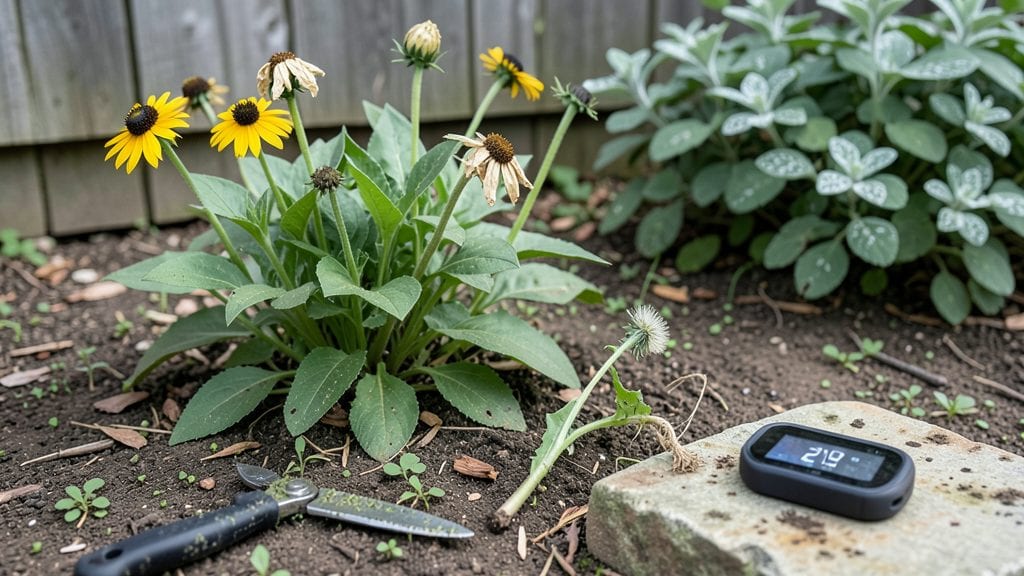
Calories burned gardening range from 150 to 400 per hour, depending on the type of work and your body weight, with heavier tasks like digging or moving soil burning the most for someone around 155 pounds.
Gardening turns out to be a surprisingly effective workout—especially when you're tackling more demanding tasks. 🌱 The difference between light pruning and heavy digging can mean burning twice as many calories, and adding weight training (like lifting bags of mulch) can push your expenditure even higher.
I've noticed that combining movement with strength—like planting flowers while squatting—boosts my calorie burn significantly compared to just standing and weeding.
Your body weight plays a bigger role than most people realize. A heavier individual will naturally burn more calories during the same tasks, while lighter gardeners might need to focus on more intense activities to reach similar results.
For example, hauling wheelbarrows of soil or using a manual lawnmower can turn gardening into a full-body cardio session.
💡 In This Article
- How Gardening Intensity Affects Calorie Expenditure
- Maximizing Calorie Burn in Your Garden Routine
How gardening intensity affects calorie expenditure
Gardening isn't just about growing plants—it's a workout disguised as leisure. The calorie burn varies dramatically based on the metabolic equivalent (MET) of each task, which measures energy expenditure relative to resting.
Light activities like pruning (MET 2.0) burn about 120 calories/hour for a 125-pound person, while heavy digging (MET 4.0) can exceed 300 calories/hour for someone 155 pounds. The key difference lies in muscle engagement and movement intensity.
Let's break down specific tasks using MET values to see how they stack up. Raking leaves (MET 3.5) engages your arms, core, and legs, burning roughly 220 calories/hour for a 155-pound person—similar to a brisk walk. Weeding (MET 3.0) is slightly lighter but still engages multiple muscle groups, while watering plants (MET 2.5) is closer to light housework.
The real calorie boosters? Digging trenches (MET 4.5) or hauling wheelbarrows (MET 5.0), which can push burns to 350-400 calories/hour—comparable to moderate cycling.
Your body weight is the wild card in this equation. A 200-pound person will burn 20-30% more calories than a 125-pound person doing the same task because heavier individuals require more energy to move their mass.
For example, digging for 30 minutes might burn 175 calories for a 125-pound person but 250 calories for someone 200 pounds. This is why heavier gardeners often see greater calorie expenditure without extra effort.
What most people overlook is how duration and technique amplify results. A 45-minute session of vigorous gardening (combining digging, hauling, and planting) can match a 30-minute jog in calorie burn for many people. The secret? Incorporating intervals—like alternating between heavy lifting and fast-paced movement—keeps your heart rate elevated.
Even simple adjustments, such as using a shovel with a longer handle (forcing deeper digs) or squatting to plant instead of bending, can increase muscle activation by 15-20%.
Here's a quick comparison of common gardening tasks and their approximate calorie burns for a 155-pound person:
- Light pruning/weeding (MET 2.0-2.5): 120-150 calories/hour (similar to slow walking)
- Raking/mowing (MET 3.0-3.5): 180-220 calories/hour (comparable to leisurely cycling)
- Digging/hauling (MET 4.0-5.0): 250-350 calories/hour (matches moderate jogging)
- Combination tasks (e.g., planting + lifting): 300-400 calories/hour (approaches intense cardio)
The science behind this lies in how gardening engages both aerobic and anaerobic systems. Digging and lifting rely on short bursts of strength (anaerobic), while continuous movement like raking or walking between rows keeps your heart rate elevated (aerobic).
This dual activation is why gardening can be a more efficient workout than many people realize—it's not just cardio or strength, but a hybrid that works your entire body. 🌿