Planting
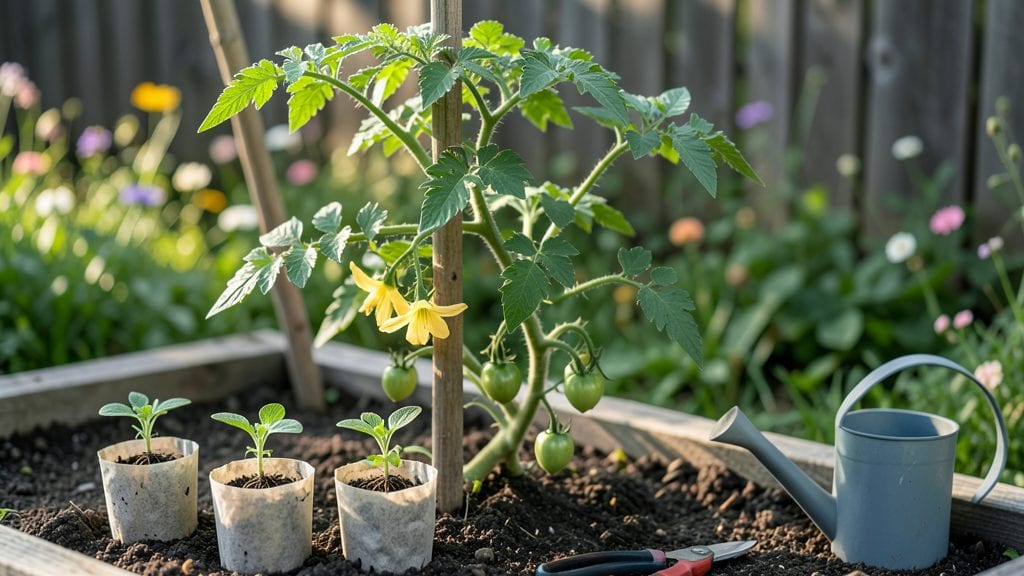
Tomato spacing in square foot gardens requires precise plant counts: 1 plant per square foot for dwarf varieties, 2 for indeterminate types, and 4 for cherry tomatoes to ensure optimal air flow and higher yields. Crowding stresses plants, cutting fruit production and inviting pests.
Getting the spacing right isn't just about fitting more plants—it's about giving each tomato the room to thrive. 🌱 Dwarf varieties stay compact, while indeterminate vines need extra space to sprawl, and cherry tomatoes produce so many fruits they demand their own dedicated square.
I've seen gardens where spacing was off by just a foot, and the difference in fruit size and disease resistance was dramatic. The key is balancing plant needs with your garden's layout, which often means sacrificing quantity for quality in the long run.
For example, if you're working with a 4×4-foot square foot garden, you'd fit 16 cherry tomato plants but only 4 indeterminate varieties. This might seem counterintuitive at first, but the trade-off pays off in bigger, healthier tomatoes and fewer blight issues.
Pro tip: Use vertical supports for indeterminate types to reclaim some of that lost space while still meeting their air circulation needs.
💡 In This Article
- How Tomato Varieties Affect Square Foot Spacing Needs
- Square Foot Tomato Planting Layouts for Maximum Yield
How tomato varieties affect square foot spacing needs
The spacing needs of tomatoes in square foot gardens stem from their fundamental growth habits. Dwarf varieties, like the Patio Prince or Tiny Tim, stay compact at about 18-24 inches tall and wide because they produce a single stem with limited branching.
This compact form allows gardeners to place 1 plant per square foot—the plant's small canopy creates minimal shade competition, and its limited foliage reduces humidity buildup near the soil. 🌱 The science here is simple: less foliage means better air circulation, which directly correlates with lower fungal disease rates like early blight.
Indeterminate tomatoes, such as Sungold or Brandywine, grow indefinitely until frost, producing vines that can reach 6-10 feet tall with sprawling canopies. These plants require 2 plants per square foot because their sprawling habit demands more space for air to move freely through the foliage.
Poor air circulation creates the perfect environment for fungal spores to thrive—studies show that crowded indeterminate tomatoes experience 30-50% higher disease incidence compared to properly spaced plants. The key is giving each vine enough room to develop a balanced canopy, which also improves fruit exposure to sunlight, boosting sugar development.
Cherry tomatoes, like Sweet 100 or Sun Gold, are prolific producers with clusters of small fruits that demand heavy support. Their 4 plants per square foot spacing isn't about the plant's size—it's about the sheer volume of fruit they produce.
Each plant can yield 10-20 pounds of tomatoes per season, and without adequate spacing, branches break under the weight, and fruits rot on the ground. The high fruit load also creates dense foliage that traps moisture, increasing the risk of blossom end rot and powdery mildew.
Proper spacing ensures each plant gets enough light and air to support that massive yield.
Vertical training changes the equation entirely. By using cages, stakes, or trellises, gardeners can effectively halve the spacing requirements for indeterminate varieties.
For example, a 6-foot-tall indeterminate tomato trained vertically might only need 1 plant per square foot instead of 2, since the foliage is elevated and air circulates more freely.
This technique works because it mimics the plant's natural growth pattern—tomatoes evolved to climb and spread horizontally in the wild, so vertical support just redirects their energy. The trade-off? You'll need to invest in sturdy supports and prune regularly to maintain airflow.
Here's a quick comparison of how growth habits dictate spacing:
- Dwarf varieties: Compact, single-stemmed, 1 plant/sq ft (e.g., Tumbling Tom)
- Indeterminate: Vining, sprawling, 2 plants/sq ft (e.g., Black Krim)
- Cherry tomatoes: High-yield, dense foliage, 4 plants/sq ft (e.g., Super Sweet 100)
The takeaway? Spacing isn't arbitrary—it's a direct response to how each variety grows and produces. Dwarf tomatoes stay small, indeterminates sprawl, and cherries explode with fruit. Understanding these differences lets you maximize your garden's potential while keeping your tomatoes healthy and productive. 🌿