Planting
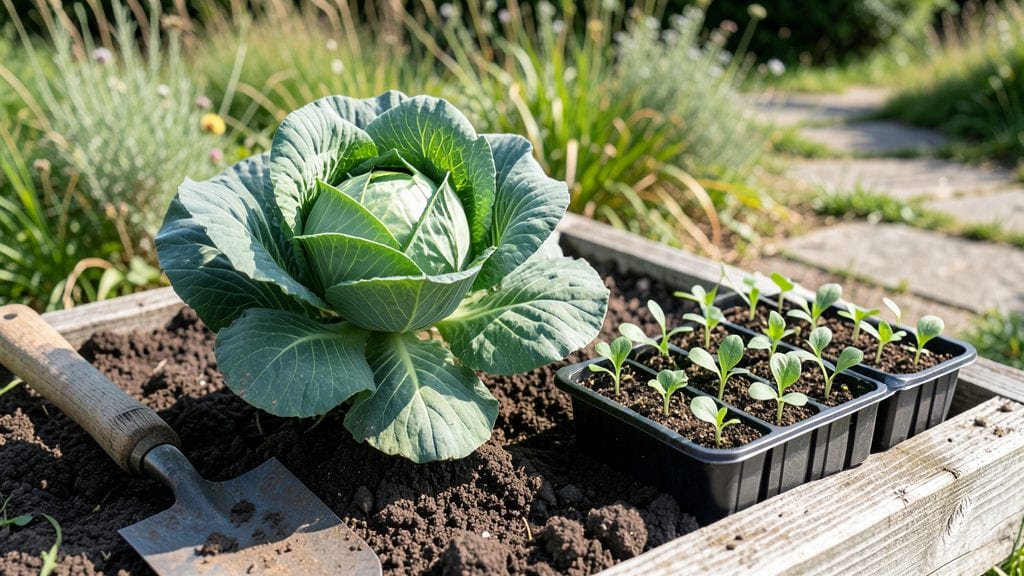
Growing cabbage with the right garden spacing is the secret to heads so dense and heavy they make your neighbors jealous 🥬—and it’s easier than you think.
Struggling to grow cabbages as big as your dinner plate? The secret isn’t just sunlight and water—it’s the spacing between plants. Get this right, and you’ll harvest dense, heavy heads that outshine your neighbors’.
But cram them too close, and you’ll end up with stunted, bitter greens that barely fill a salad bowl.
In Zone 6a, planting cabbage in spring means spacing rows 18-24 inches apart, with plants 12-18 inches apart in the row. That might seem generous, but it’s what turns floppy seedlings into plate-sized heads by June. The same rules apply for fall planting, just with a later start.
Below, I’ll break down the exact spacing for head cabbage, savoy, and bok choy, plus how to adjust for soil, climate, and those pesky mid-season crowding mistakes that shrink your harvest.
Optimal cabbage garden spacing by variety type
Cabbage isn’t just one plant—it’s a family with distinct spacing needs. Whether you’re growing head cabbage, savoy cabbage, or bok choy, proper spacing determines head size, disease resistance, and yield.
Crowd plants too closely, and you’ll end up with small, misshapen heads or worse—fungal infections from poor airflow. Let’s break down the exact measurements for each variety to maximize your harvest.
Most gardeners focus on sunlight and water, but spacing is the unsung hero of a bountiful cabbage patch. For example, Green cabbage needs 18-24 inches apart to develop those heavy, dense heads you crave.
Meanwhile, bok choy, with its rapid growth cycle, thrives in tighter quarters. Ignore these guidelines, and you’ll waste space—or worse, lose plants to clubroot disease from overcrowded, damp soil.
Here’s where variety matters most: Savoy cabbage, with its wrinkled leaves, needs slightly more room than smooth-leaved types. The extra space prevents leaf rot and allows heads to plump up fully.
Even miniature varieties like baby cabbage benefit from precise spacing to avoid stunted growth. Let’s dive into the exact row-to-row and plant-to-plant distances for each type.
Why does row-to-row spacing matter just as much as plant-to-plant? Think of it like a highway for airflow. Cabbage plants need circulation to dry leaves quickly after watering, which prevents fungal diseases like downy mildew. For head cabbage, a 36-inch row spacing gives you room to walk between rows without disturbing plants—critical for weeding and thinning. For bok choy, you might think tight spacing is fine because it grows fast, but overcrowding still stunts growth. Give these quick harvesters at least 6 inches apart to ensure crisp, tender stalks. If you’re growing bok choy in containers, space them 8 inches apart and use well-draining soil to prevent root rot. Pro tip: If you’re planting multiple varieties in the same bed, group them by maturity time. Fast growers like bok choy can go in the front row, while late-season cabbage gets the back row. This staggered spacing lets you harvest continuously without sacrificing head size. One common mistake? Assuming bigger plants need more space. Actually, taller varieties (like Jersey Wakefield) often need less row spacing because their compact growth habit reduces wind damage. Always check the seed packet guidelines, but use the minimum spacing for dwarf varieties and the maximum for heirloom giants. Finally, adjust spacing if your soil is exceptionally fertile. Rich soil can make plants grow too fast, leading to loose heads. In this case, widen spacing by 2–4 inches to slow growth and improve density. Conversely, in poor soil, plants may stay small—so narrow spacing slightly to maximize yield from limited space. With these variety-specific guidelines, you’ll avoid the heartbreak of small cabbages and instead enjoy plate-sized heads that make your garden the talk of the neighborhood. Happy planting!
Variety Type
Plant-to-Plant Spacing
Row-to-Row Spacing
Mature Head Size
Key Spacing Notes
Head Cabbage (e.g., Golden Acre, Late Flat Dutch)
18–24 inches
24–36 inches
6–8 inches diameter
Wider spacing for large heads. Use 24" spacing for heirloom varieties.
Savoy Cabbage (e.g., Savoy King, January King)
20–24 inches
30–36 inches
6–10 inches diameter
Extra space prevents leaf rot in wrinkled leaves. Ideal for cool climates.
Bok Choy (e.g., Toy Choy, Shanghai)
6–12 inches
12–18 inches
4–6 inches diameter
Tight spacing for quick harvests. Perfect for container gardening.
Baby Cabbage (e.g., Miniature Green, Red Express)
8–12 inches
12–18 inches
3–4 inches diameter
Harvest early to avoid bolting. Use 12" spacing for succession planting.
Napa Cabbage (e.g., Early Treasure, Golden Acre)
12–18 inches
18–24 inches
8–12 inches diameter
Balanced spacing for crisp stalks. Avoid overcrowding in humid areas.
How to adjust spacing for different soil and climate conditions
Your cabbage plants thrive when spacing matches your local soil fertility and climate patterns. In nutrient-rich, well-draining soil, you can plant 18-24 inches apart—but in poor soil, widen to 24-30 inches to reduce competition.
The key is balancing root spread and leaf canopy to avoid disease and maximize head size.
In dry climates like the Southwest, increase spacing to 30 inches to conserve moisture. Meanwhile, in humid regions (like the Southeast), tighten spacing to 18 inches to encourage airflow and prevent fungal infections.
Your USDA zone also plays a role—cooler zones (e.g., Zone 4-5) benefit from wider rows to protect against late frosts.
⚠️ WARNING: Overcrowding in Heavy Clay Soil ⚠️
For high-rainfall areas (like the Pacific Northwest), plant 24 inches apart to prevent waterlogging, which causes root rot. In arid zones (e.g., Zone 8-10), mulch heavily and space 30 inches apart to retain moisture.
Even bok choy, a compact variety, needs 12-15 inches in dry heat to avoid bolting prematurely.
Adjust rows too: In fertile loam, keep rows 24 inches apart; in sandy soil, widen to 30 inches to prevent erosion. Always test your soil’s pH (6.0-7.0 ideal)—acidic soil (pH <5.5) stunts growth, requiring wider spacing to compensate.
Use a soil test kit ($15) for precision.
Pro tip: In container gardens, limit to 1 plant per 5-gallon pot—crowding leads to small, loose heads. If you’re in Zone 5 or colder, plant 18 inches apart and use row covers to protect young plants from late frosts, which stress roots and reduce yield.
Fine-tune spacing mid-season: If leaves touch by 6 weeks, thin to 24 inches immediately. Watch for pest pressure (e.g., cabbage moths)—tighter spacing attracts them, so adjust if infestations occur. With these tweaks, your cabbage heads will reach dinner-plate size every time. 🥬