
Flowers
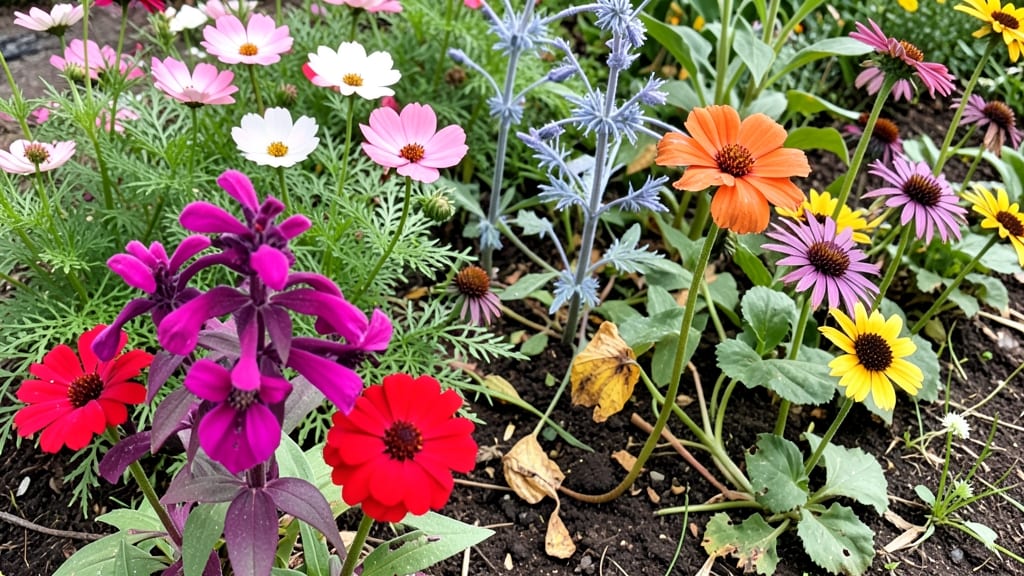
My rainbow garden flowers burst with joy—each bloom a living brushstroke that turns your yard into a vibrant masterpiece from spring’s first blush to frost’s final kiss. 🌈 I designed mine after realizing most gardens stuck to one or two colors, missing the chance to create a visual feast that changes with the seasons.
The key is mixing flowers that bloom at different times so you always have something popping, whether it's the bold red of cardinal flowers in summer or the delicate lavender of winter jasmine in January.
You don't need acres or fancy tools—just a sunny spot, a few well-chosen varieties, and a little planning. My 6x8-foot bed uses 12 plants total, arranged in drifts by color: reds together, purples near blues, and whites to tie everything.
The secret is pairing fast growers like cosmos with slow starters like peonies so gaps never show. Pollinators love this setup too, since every flower attracts bees, butterflies, or hummingbirds.
By late summer, your garden will be a riot of color—think deep magenta salvias next to golden black-eyed Susans, all while the air hums with bees. The best part? Even in winter, you'll have evergreens like hellebores in soft pinks and purples to keep the show going.
This isn't just decoration; it's a year-round experience that changes with every season.
Works in containers too—just scale down the sizes. Whether you're filling a border or planting window boxes, the same principles apply. Let's make your garden the talk of the neighborhood with color that never quits.
📚 In This Guide
- What you need
- Instructions
- Tips and common mistakes
- Wrapping up and next steps
What you need
- ● Seeds or seedlings: 10–20 pollinator-friendly annuals (e.g., cosmos, zinnias, marigolds, sunflowers)
- ● 5–10 perennial varieties (e.g., bee balm, coneflowers, black-eyed Susans) for long-term color
- ● 3–5 bulbs (e.g., tulips, daffodils, crocuses) for early spring blooms
- ● Soil: 1–2 bags of high-quality potting mix or native soil amended with compost (50% soil, 50% compost for optimal drainage)
- ● Fertilizer: Balanced 10-10-10 or organic fertilizer (follow package instructions)
- ● Mulch: 2–3 bags of organic mulch (e.g., straw, wood chips) to retain moisture and suppress weeds
- ● Gardening tools: 1 garden trowel (for transplanting seedlings)
- ● 1 hand fork (for loosening soil)
- ● 1 pruners (for trimming dead blooms)
- ● 1 watering can or hose with spray nozzle
- ○ Optional (but helpful!): 1 garden kneeler/pad (for comfort)
- ● 1 wheelbarrow (for hauling soil/mulch)
- ● 1 pH testing kit (to ensure soil is 6.0–7.0 for most flowers)
- ● 1 bird feeder or bat house (to attract pollinators year-round!)
- ● ✅ Sunlight: 6+ hours of direct sun daily (adjust for shade-tolerant varieties like impatiens or fuchsias)
- ● ✅ Space: Minimum 4’x4’ plot (expandable for larger gardens!)
- ● ✅ Water source: Easy access to a hose or watering system
- ● ✅ Knowledge: Basic gardening skills (or willingness to learn! 🌟)
How to design a stunning rainbow garden that blooms year-round
Here's the foolproof approach I use to create vibrant, pollinator-friendly gardens that burst with color in every season.
🌱 Step 1: Plan Your Color Palette and Seasonal Layers
Start by sketching your garden layout with four distinct layers: tall backdrops, mid-height shrubs, mid-level perennials, and low-growing annuals. I like to use a 6-color rainbow wheel (red, orange, yellow, green, blue, purple) as my guide, selecting flowers that bloom in different seasons to maintain continuous color. For example, pair spring tulips (red) with summer coneflowers (yellow) and fall asters (purple).
Designate one corner as a pollinator hotspot—this is where you'll cluster native flowers like bee balm (pink), black-eyed Susans (gold), and purple coneflowers. These plants attract bees, butterflies, and hummingbirds while providing nectar throughout the growing season. I always include at least three pollinator-friendly species in every rainbow garden to ensure year-round activity.
☀️ Step 2: Select Sun Exposure and Soil Conditions
Most rainbow flowers thrive in full sun (6+ hours daily), but I always include 3-4 shade-tolerant varieties like heuchera (purple), hostas (green), and bleeding hearts (pink) for areas with limited sunlight. Test your garden's light conditions by observing which spots get direct sun, partial shade, or full shade throughout the day—this determines where to place sun-loving annuals versus shade-perennials.
Amend your soil with 2-3 inches of compost before planting to improve drainage and nutrient retention. I like to mix in a handful of bone meal for phosphorus (which encourages root growth) and a sprinkle of greensand for potassium (which supports flowering). Test your soil's pH—most rainbow flowers prefer slightly acidic to neutral soil (6.0-7.0), so adjust with lime if needed.
🪴 Step 3: Plant in Phased Blooms for Continuous Color
Divide your flowers into three bloom-time groups: early spring, mid-summer, and fall/winter. For example, plant daffodils (yellow) and crocuses (purple) in early spring, zinnias (red/orange) and salvias (blue) in summer, and chrysanthemums (white/pink) and pansies (mixed colors) in fall. This ensures your garden never looks bare—when one variety fades, another takes over.
Space plants according to their mature size: tall flowers (like delphiniums) 18-24 inches apart, mid-height (like daylilies) 12-18 inches apart, and low-growing (like ajugas) 6-12 inches apart. I always plant 3-5 of each variety in clusters to create a bold, cohesive look while allowing pollinators easy access to the center of the flower.
💧 Step 4: Water and Mulch for Long-Term Vibrancy
Water deeply once a week (or more in extreme heat) to encourage deep root growth. I use drip irrigation for efficiency, placing emitters at the base of each plant to avoid wetting leaves (which can cause fungal diseases). Water in the early morning to reduce evaporation and give plants time to absorb moisture before the heat of the day.
Apply a 2-3 inch layer of organic mulch (like shredded bark or straw) around plants to retain moisture, suppress weeds, and regulate soil temperature. Refresh the mulch once a year in early spring—this keeps your rainbow garden looking neat while protecting roots from temperature swings. Avoid piling mulch against stems to prevent rot.
✂️ Step 5: Prune and Deadhead for Extended Blooms
Deadhead spent blooms weekly to encourage new flowers and prevent seed formation. For example, pinch off faded zinnias to redirect energy into producing more vibrant blooms. I also trim back leggy stems in early summer to promote bushier growth—this keeps your rainbow garden dense and full rather than sparse and straggly.
In late fall, cut back perennial stems to 2-3 inches above the ground and remove any dead or diseased foliage. This clears space for new growth in spring while keeping pests and diseases from overwintering in old plant debris. I leave a few seed heads (like black-eyed Susans or coneflowers) for winter interest and to feed birds.
Tips & tricks for creating a stunning rainbow garden
Real talk: the secret to a rainbow garden that actually thrives isn't just about planting colorful flowers—it's about the little details that make all the difference. Here's what nobody tells you about keeping your garden vibrant and pollinator-friendly year after-round.
Seasonal Color Planning: In Step 1, when you're sketching your layout, I recommend drawing a simple color wheel with your six rainbow colors (red, orange, yellow, green, blue, purple) and circling which colors you want to feature in each season. For example, I always dedicate my spring section to reds and purples (tulips and crocuses) while summer gets the bright yellows and oranges (coneflowers and zinnias). This visual guide helps prevent color clashes and ensures your garden looks intentional from every angle.
Pollinator Placement: The pollinator hotspot in Step 1 is your most important feature—don't just throw a few flowers in a corner! I like to create a "pollinator path" that winds through my garden, connecting different sections. Place your bee balm and purple coneflowers near seating areas so you can watch the activity while enjoying your garden. This also makes it easier for pollinators to navigate between different flower types throughout the day.
Soil Prep Shortcut: While the instructions mention 2-3 inches of compost, I've found that adding a thin layer of worm castings mixed into the top 6 inches of soil gives an extra nutrient boost without taking up garden space. Worm castings are rich in beneficial microbes that help roots absorb nutrients more efficiently. Just be sure to use them in addition to—not instead of—the compost layer mentioned in Step 2.
Deadheading Strategy: In Step 5, when deadheading weekly, I've learned to use a pair of clean, sharp pruners for larger flowers (like zinnias) and my fingers for smaller blooms (like pansies). The key is to cut just above a set of healthy leaves or a leaf node—this encourages new growth from that point. I also set aside a small bucket to collect spent blooms and use them to make homemade flower fertilizer tea later in the season.
Pro Tips for Rainbow Garden Flowers
- Real talk: the secret to a rainbow garden that actually thrives isn't just about planting colorful flowers—it's about the little details that make all the difference.
- For example, I always dedicate my spring section to reds and purples (tulips and crocuses) while summer gets the bright yellows and oranges (coneflowers and zinnias).
- Pollinator Placement: The pollinator hotspot in Step 1 is your most important feature—don't just throw a few flowers in a corner!
Frequently asked questions
Got questions about creating a vibrant rainbow garden? We’ve got answers!
Whether you're a beginner or a seasoned gardener, these FAQs will help you design, maintain, and troubleshoot your pollinator-friendly flower haven.
What’s the best time of year to plant rainbow garden flowers?
Most rainbow garden flowers thrive when planted in early spring (after the last frost) or early fall. Cool-season blooms like pansies and snapdragons can handle light frosts, while heat-lovers (e.g., zinnias, marigolds) prefer warmer soil. Check seed packets for specific timelines—some varieties, like tender perennials, may need winter protection!
Which flowers attract the most pollinators without being invasive?
Stick to native, non-invasive varieties like bee balm, coneflowers, lavender, and milkweed (critical for monarchs). Avoid aggressive spreaders like mint or bamboo; opt for clumping perennials. Pro tip: Mix heights and bloom times (e.g., early spring crocuses + summer cosmos) to keep pollinators fed year-round!
How often should I water rainbow garden flowers?
Water deeply 1–2 times per week (more in extreme heat/drought). Newly planted flowers need consistent moisture—aim for 1 inch of water per week. Use drip irrigation or soaker hoses to avoid wetting foliage (reduces fungal diseases). Mulch heavily (2–3 inches) to retain moisture and regulate soil temp.
What’s the easiest way to prevent pests in a rainbow garden?
Combine prevention + natural remedies:
- Rotate crops annually to disrupt pest life cycles.
- Plant repellent companions: Marigolds deter aphids; basil wards off mosquitoes.
- Spray neem oil or insecticidal soap on affected leaves (early morning/evening).
- Encourage ladybugs and lacewings—they eat pests!
Can I grow rainbow flowers in containers or small spaces?
Choose compact varieties like pansies, petunias, or dwarf zinnias. Use 10–12" pots for single plants; larger containers (18"+) for clusters. Ensure pots have drainage holes and use lightweight potting mix. Rotate containers occasionally for even sun exposure!
How do I extend the blooming season for my rainbow garden?
Plan for successive blooms:
- Stagger plantings: Sow fast-growing annuals (e.g., cosmos) every 2–3 weeks.
- Deadhead spent flowers (pinch off faded blooms) to encourage reblooming.
- Choose perennials with long seasons, like black-eyed Susans (summer–fall) or heather (fall–winter).
- Add cool-season annuals (e.g., snapdragons) in late summer for winter color.
Wrapping up and next steps
Transforming your garden into a vibrant rainbow haven isn’t just about beauty—it’s a gift to pollinators and the soul! 🌈 With the right pollinator-friendly flowers, you’re creating a thriving ecosystem while enjoying year-round color. Whether you’re a beginner or a seasoned gardener, every bloom you plant makes a difference.
Ready to take the next step? Start small—pick one or two flowers from this guide and plant them this weekend. Watch your garden (and local bees & butterflies) thrive as you expand your rainbow patch over time. Happy gardening! 🌸