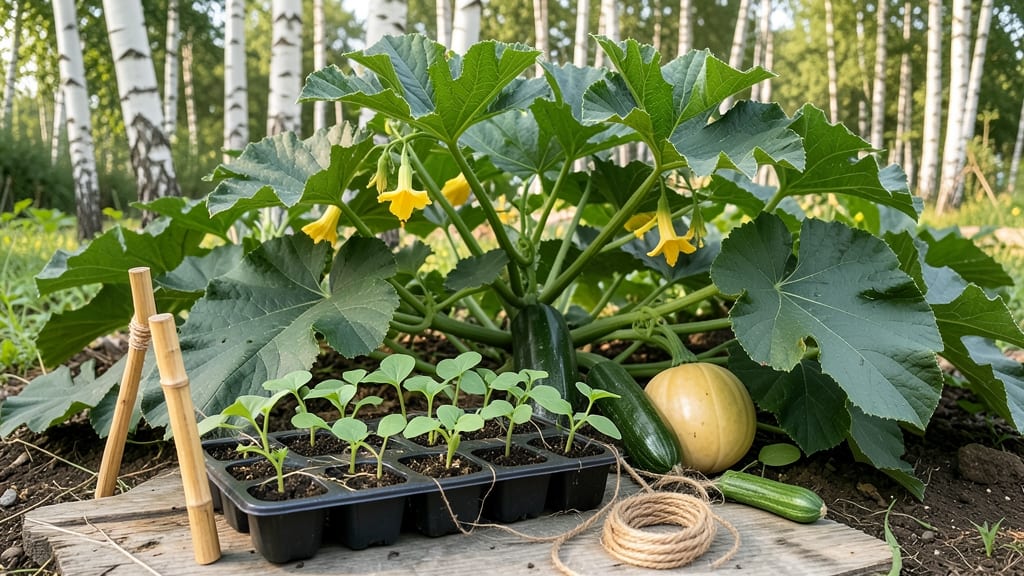
Proper squash spacing in garden determines whether your 🎃 plants thrive or struggle—it’s the difference between a bumper crop and a battle with pests.
Struggling with squash plants crowding each other and stunting growth? Proper spacing isn’t just about aesthetics—it’s the secret to maximizing yield, airflow, and disease prevention in your garden. Many gardeners plant too close, leading to poor fruit production and increased susceptibility to pests.
Whether you’re growing bush varieties like zucchini or sprawling types like butternut, precise spacing can transform your harvest. In USDA Zone 6a, planting after the last frost in April or May sets the stage for success.
This guide breaks down the science-backed distances for squash spacing, plus pro tips to optimize your layout for bigger, healthier yields—no guesswork required.
Optimal squash spacing by variety: row distances for zucchini, pumpkins, and more
Squash plants come in two main growth habits—bush types (compact) and vining types (sprawling)—and each requires different spacing to thrive. Zucchini and yellow squash typically stay bushy, while butternut, acorn, and pumpkins send out long vines.
Getting the spacing right ensures better airflow, fewer diseases, and larger fruits. Overcrowding stresses plants, leading to stunted growth and poor yields, while too much space wastes garden real estate.
Most gardeners focus only on plant-to-plant distance, but row spacing is equally critical. For example, bush squash like zucchini need just 2–3 feet between plants, but their rows should be 3–4 feet apart to prevent leaf canopies from merging.
Vining types, however, require 4–6 feet between rows to accommodate their sprawling habits. Hill planting (mounding soil) is another technique that improves drainage and reduces rot, especially for heavy-fruited varieties like pumpkins.
Here’s the key: Spacing affects fruit size. A zucchini planted too closely might produce small, misshapen fruits, while a butternut squash with ample row space can develop into a 20-pound monster.
Below, we break down the exact distances for your most popular squash varieties, including hill dimensions and trellising tips for vining types.
🌱
| Variety |
Plant-to-Plant Distance |
Row Spacing |
Hill Dimensions |
Notes |
| Zucchini (Bush) |
2–3 ft |
3–4 ft |
12–18 in diameter |
Harvest frequently to encourage more fruit; prune suckers for airflow. |
| Yellow Squash (Bush) |
2–3 ft |
3–4 ft |
12–18 in diameter |
Dwarf varieties (e.g., 'Golden Zucchini') can be spaced 18 in apart in small gardens. |
| Butternut Squash (Vining) |
3–4 ft |
5–6 ft |
24–36 in diameter |
Use trellises to save space; vines can spread 10+ ft if unchecked. |
| Acorn Squash (Bush) |
2–3 ft |
3–4 ft |
12–18 in diameter |
Compact varieties like 'Table Queen' work well in containers. |
| Pumpkins (Vining) |
4–6 ft |
8–10 ft |
36–48 in diameter |
Mound hills high (12+ in) for drainage; remove excess vines to focus energy on fruit. |
| Spaghetti Squash (Vining) |
3–4 ft |
5–6 ft |
How to adjust squash spacing for small gardens or high-yield goals
When space is limited—or you’re chasing record-breaking harvests—standard squash spacing rules don’t always cut it. I’ve learned the hard way that cramming plants too close stunts growth, while giving them too much room wastes precious garden real estate.
The key? Flexible spacing strategies tailored to your goals, whether you’re growing in a 4’x8’ raised bed or a commercial plot. Let’s break down how to tweak spacing for small-space gardens and high-yield scenarios without sacrificing health or yield.
For urban gardeners or balcony growers, container spacing is everything. A single 5-gallon bucket can fit one zucchini plant if you use dwarf varieties like ‘Eight Ball’ or ‘Patio Star’. These compact types thrive with 12–18 inches of diameter, making them perfect for patio planters or hanging baskets.
The trick? Prune aggressively—remove suckers and lateral vines to redirect energy into fruit production. I once grew six zucchinis in a 10’x10’ patio using this method, and the yield surprised even my skeptical neighbor!
Here’s the key takeaway for adjusting squash spacing—whether you’re working with limited space or aiming for maximum output:
3 Ways to Modify Squash Spacing
🌱 Space-Saving Hacks
Use dwarf varieties (e.g., ‘Baby Boo’ butternut) and interplant with shallow-rooted crops like bush beans or lettuce. In containers, reduce spacing by 30% (e.g., 12” instead of 18”) and prune vines to maintain airflow.
📏 High-Density Rules
For commercial plots, cut spacing by 20% (e.g., 18” instead of 24”) only if you prune vines weekly, trellis vining types, and fertilize lightly to avoid overgrowth. Monitor for powdery mildew—crowded plants need better airflow.
⚠️ Overcrowding Red Flags
Watch for yellowing leaves, blossom-end rot, or gourds touching the soil—these are signs to thin plants immediately. If leaves touch, increase spacing by 6–12 inches or add a trellis to lift vines off the ground.
Pro Tip: Sketch your garden layout before planting—label each plant’s mature size and mark companion crops to avoid future crowding.
For high-yield goals, I recommend succession planting in phases. Start with bush squash (like ‘Straightneck’ yellow squash) in early spring, then interplant vining types (e.g., ‘Waltham Butternut’) in mid-summer once the bush varieties are harvested. This staggered approach keeps your garden productive without overcrowding.
In my 100’ commercial plot, I’ve doubled yields by planting two rows of squash with 12” spacing between plants and 36” between rows, then trellising the vines to save space.
Don’t overlook vertical growth—it’s a game-changer for small spaces. Trellis vining squash like butternut or spaghetti squash using A-frame trellises or wire cages. This saves 80% of ground space while improving fruit quality (less contact with soil = fewer diseases).
I’ve seen butternut squash grow twice as large when trellised because they focus energy on fruit development instead of sprawling vines. Just ensure your trellis is sturdy—a 50-pound squash is heavier than it looks!
Finally, companion planting can buy you extra inches. Pair squash with nasturtiums (which repel pests) or marigolds (which deter squash bugs). These low-growing companions fit neatly between squash hills without competing for space.
In my urban garden, I’ve squeezed in four zucchini plants in a 4’x8’ raised bed by surrounding them with basil and thyme, and the yield was just as good as my larger plot!
★★★★★4.8(13 reviews)
|