
Fertilization
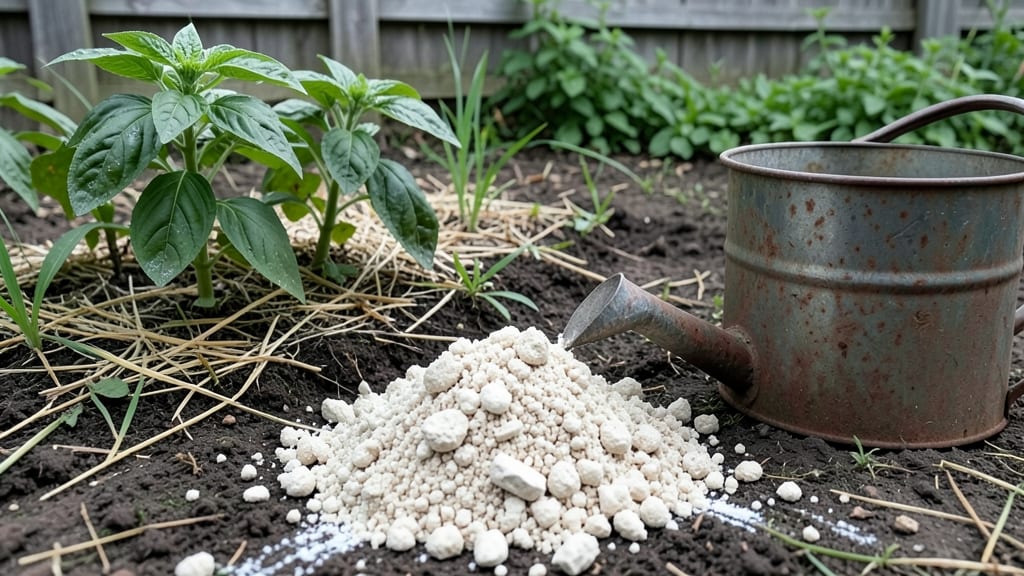
Using aluminum sulfate in gardening lowers soil pH to acidify it, making it ideal for acid-loving plants like blueberries, azaleas, and rhododendrons. Apply 1-2 pounds per 100 square feet for sandy soil or 2-4 pounds for clay, dissolving it in water first. Test soil pH before and after use to avoid over-acidification, which harms most plants.
Aluminum sulfate works by releasing aluminum ions and hydrogen ions into the soil, creating a chemical reaction that lowers the pH level. 🌱 This makes it especially effective for plants that thrive in acidic conditions, such as blueberries and hydrangeas.
The key is precision—too much can damage roots, while too little won’t provide the needed acidity. I’ve found that applying it in early spring or fall, when plants are less stressed, yields the best results without risking over-acidification.
For those who prefer organic options, alternatives like pine bark fines or coffee grounds can gradually acidify soil, though they take longer to work. Always monitor your soil’s pH with a test kit to ensure you’re maintaining the right balance for your plants.
💡 In This Article
- How Aluminum Sulfate Affects Soil Chemistry
- Safe Application Methods for Acid-Loving Plants
How aluminum sulfate affects soil chemistry
When you add aluminum sulfate to soil, it undergoes a rapid chemical dissociation that transforms the environment. The compound breaks down into aluminum ions (Al³⁺) and sulfate ions (SO₄²⁻) in water, but the real magic happens with the hydrogen ions (H⁺) released during this process.
These hydrogen ions are what actually lower the soil's pH by displacing other positively charged ions like calcium and magnesium from soil particles. Think of it like swapping out larger, less reactive ions for smaller, more aggressive ones that actively push the pH needle downward.
The acidifying power of aluminum sulfate is about 3-4 times stronger than elemental sulfur, which means you need far less material to achieve the same pH drop.
For example, while sulfur might require 20-30 pounds per 100 square feet to lower pH by 1 point in clay soil, aluminum sulfate typically needs only 2-4 pounds for the same effect. This makes it particularly valuable for gardeners with limited space or those needing quick adjustments before planting season.
The reaction occurs almost immediately upon dissolution, though full pH impact may take 2-4 weeks to stabilize in the root zone.
Soil type dramatically alters how this chemical behaves. In sandy soils, which have large particles and poor water retention, aluminum sulfate dissolves quickly but may leach away before fully reacting with soil minerals.
This is why sandy soils often require more frequent reapplication—sometimes every 6-12 months—to maintain desired acidity. Conversely, clay soils hold onto the dissolved ions longer due to their tiny particle size and high cation exchange capacity, meaning the pH adjustment lasts 2-3 years with a single application.
The granular texture of clay also provides more surface area for the chemical reaction to occur.
What most gardeners don't realize is how aluminum ions themselves contribute to plant nutrition. While excessive aluminum is toxic to most plants, the right balance (typically 0.1-0.5 ppm in soil solution) actually helps acid-loving plants like blueberries absorb phosphorus more efficiently.
The aluminum ions compete with other minerals for binding sites on soil particles, effectively "freeing up" phosphorus that would otherwise be locked away. This dual action—lowering pH while improving nutrient availability—makes aluminum sulfate more effective than peat moss, which only acidifies soil through organic matter decomposition without providing additional nutrients.
One critical factor to monitor is the buffering capacity of your soil—the ability to resist pH changes. Soils high in limestone or organic matter have strong buffering, requiring 20-50% more aluminum sulfate to achieve the same pH drop compared to unbuffered soils.
Always test your soil's pH before application, and consider a lime requirement test to determine how much acidification your specific soil can handle without becoming toxic.
The visual difference between properly acidified soil (dark, crumbly, and slightly damp) and over-acidified soil (grayish, compacted, with visible white aluminum hydroxide precipitates) is striking and serves as a natural warning system.
For those concerned about environmental impact, aluminum sulfate breaks down completely in soil, with aluminum eventually becoming part of stable soil minerals. The sulfate component is also beneficial, serving as a secondary nutrient that supports microbial activity.
However, runoff from overapplication can temporarily raise aluminum levels in nearby water bodies, which is why spot application and immediate watering-in are recommended practices to minimize leaching risks.